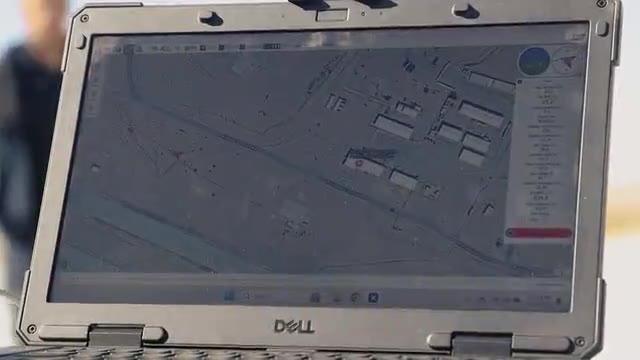
What does the available evidence leave unresolved? An evaluation brief for international partnerships.
What does the available evidence leave unresolved?
An uncertain finding can still be useful when its limits are clear. The danger comes when a score or polished explanation conceals the missing evidence. Institutions in different jurisdictions want to explore whether a technology can address a shared research or commercial problem. Participants may operate under different information-sharing, approval, intellectual-property, and institutional requirements.
A practical starting point
For this evaluation, remove one important source and inspect whether the conclusion becomes more limited rather than more speculative. Separate what was observed from what was inferred. Identify competing explanations and describe the evidence that would distinguish them. Use the review interface to show when a result is provisional and what action is appropriate while the question remains open. The immediate concern is whether a productive research conversation is mistaken for permission to transfer information or use a technology outside the agreed scope. The review should make that possibility testable, rather than relying on the apparent fluency or completeness of the output.
Examine the boundary
Trace one proposed information exchange from the originating institution to the intended recipient and identify each approval needed before it occurs. Test cases in which the evidence is incomplete, contradictory, or outside the method's validated setting. Ask whether the result remains appropriately limited. A system should be able to identify an unresolved question without manufacturing a precise answer. Bring the participating institutions and their designated technical and agreement representatives into the review when the finding affects an operational or institutional decision. Their role is to connect the evidence with the authority needed to act on it.
Keep the evidence connected
Use a collaboration scope recording the parties, proposed work, information boundaries, rights questions, and decision authorities. Record supported observations, inferred relationships, alternatives, confidence rationale, and the additional evidence needed for resolution. A later reviewer should be able to see the original question, the observations that mattered, and the point at which the team moved from investigation to a decision. Preserve contradictions and unresolved questions alongside the outcome.
From evaluation to use
Start with a clearly scoped, appropriately shareable problem statement. Resolve the participation and information boundaries through the responsible institutional processes before expanding the collaboration. A numerical confidence value does not explain its own reliability. The reviewer needs to understand how it relates to the specific claim and operating conditions. The practical next step is a bounded review with an identified owner, a stated question, and an evidence package that supports the decision.
Continue the conversation
Bring your operating question.
Connect your objective with the relevant attribution, governance, research, or licensing pathway.
Contact Spyris