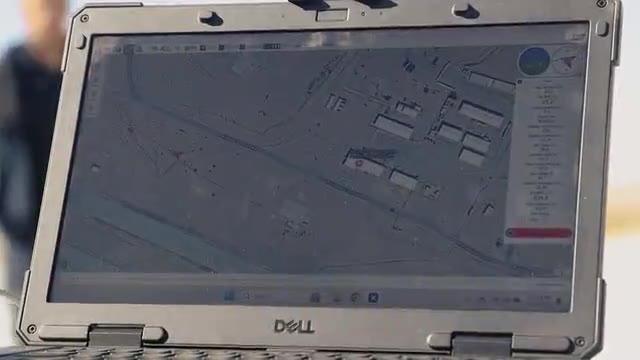
What context must survive the connection? An evaluation brief for field logistics.
What context must survive the connection?
An integration should carry the information needed for the next decision. Moving content without its provenance, permission, or operating context can create a new source of ambiguity. A logistics team wants to use AI to reconcile supply reports and identify questions that require a planner's attention. Connectivity can be intermittent, quantities can change quickly, and similar item descriptions can refer to different requirements.
A practical starting point
For this evaluation, remove one expected context field and inspect whether the downstream workflow detects the missing information. Define the inputs, outputs, identity boundaries, failure behavior, and ownership of the connection. Identify the minimum context that downstream review requires. Keep the original response associated with the finding and any conditions attached to its use. The immediate concern is whether an estimate or delayed update is mistaken for a confirmed inventory position. The review should make that possibility testable, rather than relying on the apparent fluency or completeness of the output.
Examine the boundary
Introduce a delayed report, a duplicated line item, and a contradictory quantity while keeping the planning question unchanged. Test normal behavior alongside unavailable services, incomplete records, duplicate events, and changing source versions. Inspect whether the integration preserves enough evidence to explain what happened when a dependency behaves unexpectedly. Bring the logistics planner and the custodian of the source system into the review when the finding affects an operational or institutional decision. Their role is to connect the evidence with the authority needed to act on it.
Keep the evidence connected
Use a reconciliation record linking each proposed discrepancy to its source report, observation time, and responsible planner. Record interface scope, exchanged data, context fields, failure conditions, version assumptions, and the operational role responsible for the connection. A later reviewer should be able to see the original question, the observations that mattered, and the point at which the team moved from investigation to a decision. Preserve contradictions and unresolved questions alongside the outcome.
From evaluation to use
Evaluate whether the workflow reduces unresolved questions without concealing their uncertainty. The operating team needs a clear way to revisit a recommendation when new information arrives. Connecting two tools does not establish that the combined workflow is suitable for every use. Evaluate the behavior of the complete path, including the human handoff. The practical next step is a bounded review with an identified owner, a stated question, and an evidence package that supports the decision.
Continue the conversation
Bring your operating question.
Connect your objective with the relevant attribution, governance, research, or licensing pathway.
Contact Spyris